

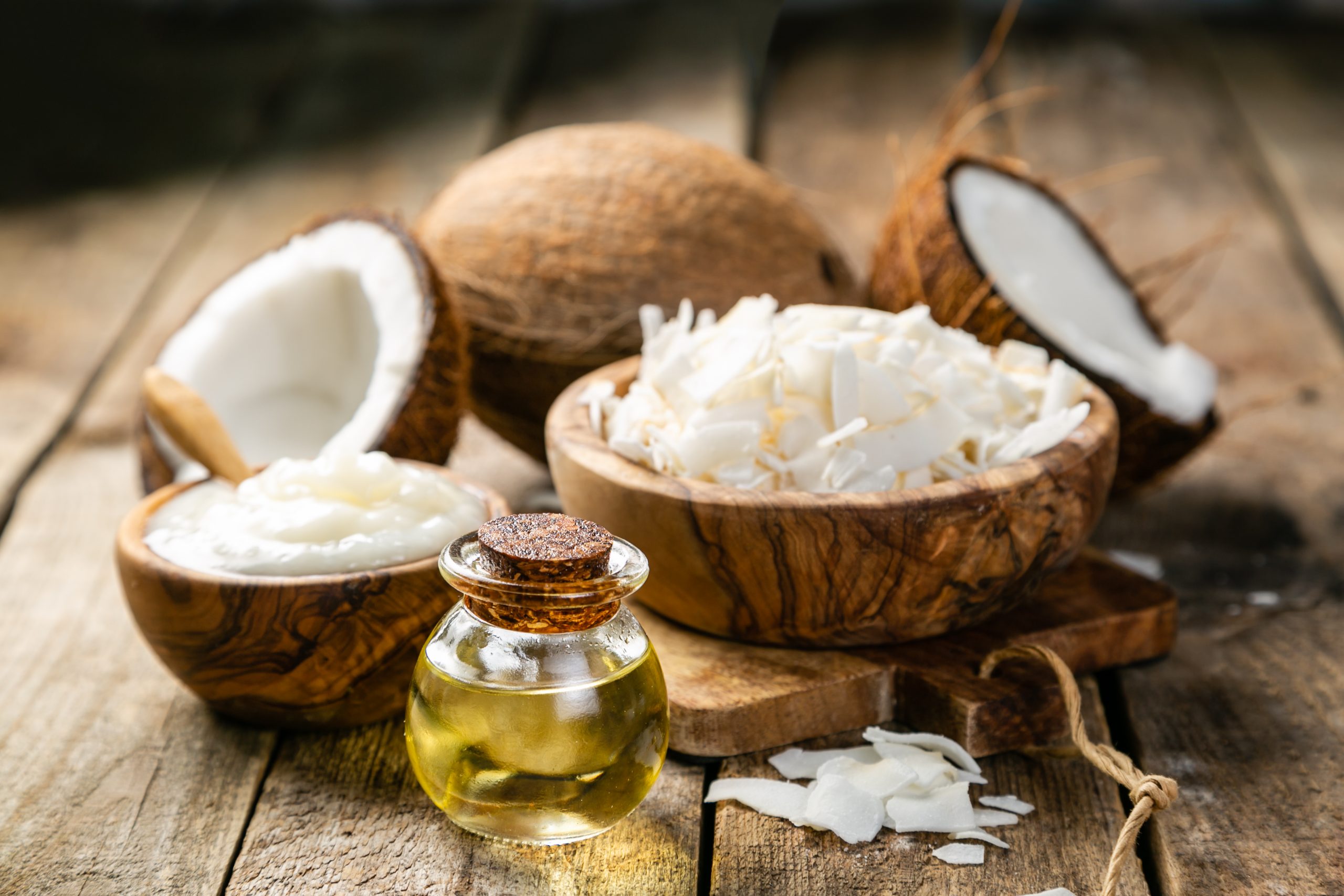
For years, a popular claim has circulated: “Coconut oil can reverse Alzheimer’s disease.” It sounds hopeful—after all, coconut oil is natural, widely available, and linked online with glowing brain-health claims. But is this claim supported by solid science? Let’s explore what the evidence actually says.
The Claim
Followers of this idea highlight that coconut oil contains medium-chain triglycerides (MCTs). MCTs may be converted by the liver into ketones—an alternate energy source for brain cells. The thinking: in Alzheimer’s disease (AD), the brain’s ability to use glucose may be impaired, so ketones might “rescue” brain energy. Thus, some conclude that coconut oil could slow or reverse AD.
What the science says
The reality is more cautious. While the ketone hypothesis is interesting, very few rigorous studies support coconut oil as a treatment or cure for Alzheimer’s. Even the major brain-health authorities say: no supplement, including coconut oil, has been proven to prevent, treat, or cure Alzheimer’s disease.
For example, the National Institute on Aging (NIA) notes that while dietary approaches play a role in brain health, they do not replace meaningful, evidence-based treatments. The NIA fact sheet on Alzheimer’s disease underscores that no supplement has yet been shown to change the course of the disease.
Also, clinical trials of MCTs in Alzheimer’s are very limited—small sample sizes, short durations, mixed results. They give hypotheses rather than practice-ready findings.
In short, the jump from “coconut oil might help metabolism in theory” to “coconut oil cures Alzheimer’s” is not supported.
Why the hype persists
There are a few reasons why this claim keeps spreading.
- Natural-product appeal: People often prefer “natural” remedies over pharmaceuticals.
- Anecdotes and testimonials: Stories of individuals “feeling better” after using coconut oil can spread widely, even if not scientifically controlled.
- Misinterpretation of brain-metabolism research: It’s true the brain uses energy differently in Alzheimer’s; researchers are investigating this. But translating that into a dietary oil miracle is a leap.
- Low risk perception: Coconut oil is readily available and seen as benign, so the downside feels minimal—though any regime change should still be discussed with a doctor.
The takeaway for you & your brain
Here’s what you can share confidently:
- Eating coconut oil in moderate amounts is unlikely to cause harm for most people, but it is not a cure for Alzheimer’s.
- Instead of focusing on “magic” single foods, focus on overall dietary patterns with stronger evidence for brain health—like the Mediterranean or DASH diet (rich in vegetables, lean proteins, healthy fats, whole grains).
- Combine healthy eating with other proven brain-health strategies, such as physical activity, sleep quality, social connection, and mental challenge.
- If an individual has Alzheimer’s or is at risk, they should consult their neurologist or geriatrician before relying on unproven supplements.
- Finally, in the research world, coconut oil remains a hypothesis, not a therapy.
Use coconut oil if you like it—as part of a balanced diet—but don’t rely on it as a treatment for Alzheimer’s.
Sources:
- National Institute on Aging. “Alzheimer’s Disease Fact Sheet.”
- Alzheimer’s Association. “Diet and Nutrition: Research Progress in Prevention.”